

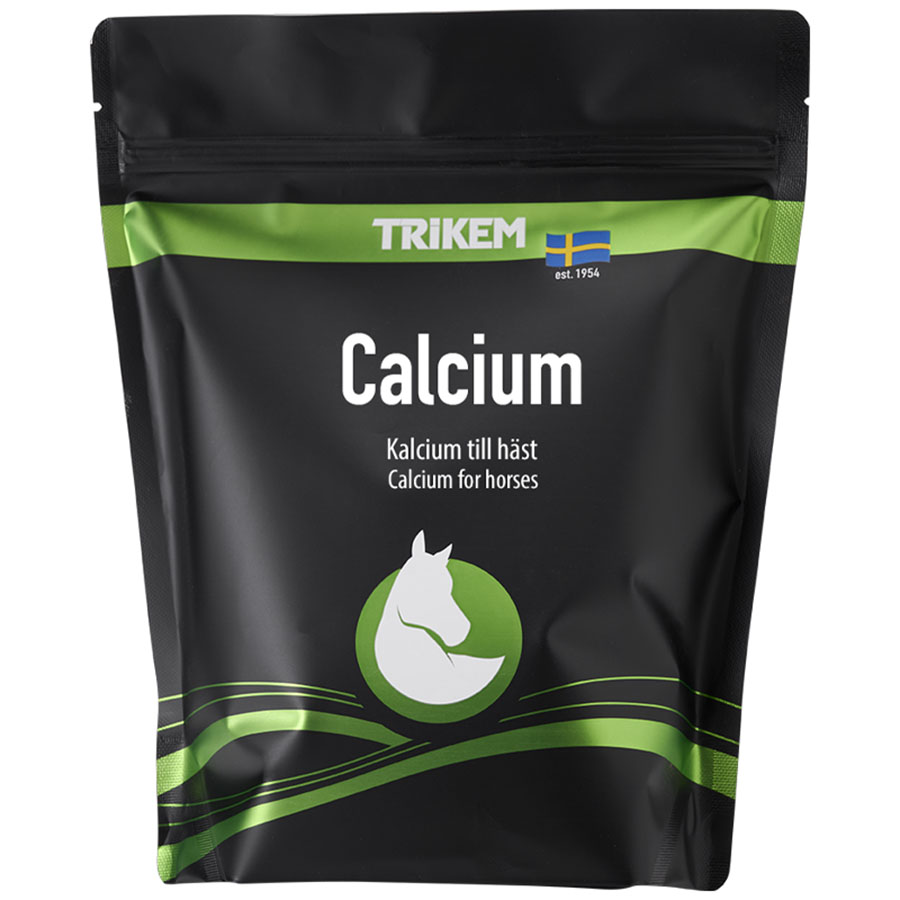
Calcium is an essential mineral that plays several key roles in the horse's body. It is part of the skeleton, teeth, and is important for muscle function.
The balance between calcium and phosphorus in the diet is crucial. If this ratio is disturbed, it can negatively affect the horse's health. A suitable calcium to phosphorus ratio is 1.2:1 to 1.8:1. This is especially important for pregnant and lactating mares, as well as for young, growing horses.
The importance of calcium
Calcium is a macro mineral that is mainly stored in the skeleton but also has important functions throughout the body. It contributes to building the skeleton, enables muscle work, affects cellular energy metabolism, and is necessary for blood clotting ability.
Calcium deficiency
When the horse does not receive enough calcium, the skeleton is primarily affected. This can lead to brittle bones or improper skeletal development in young horses, which in turn can cause future skeletal and joint problems. A deficiency may also affect the nervous system, potentially resulting in muscle cramps.
The maintenance requirement for an adult horse is about 4 g of calcium per 100 kg body weight per day. Pregnant and lactating mares, as well as growing horses, have higher needs.
When is calcium recommended?
When the feed ration does not contain sufficient calcium or when the Ca:P ratio needs adjustment.
Dosage
Given when there is a calcium deficiency in the ration.
Standard dose: 6 ml per 100 kg body weight per day. Alternatively, according to calculated feed ration.
Composition
Limestone meal
Content (per kg)
Calcium: 357 g
Silicon: 42 g
Analytical constituents
Calcium: 35.7 g/kg
Sodium: 0 g/kg
Phosphorus: 0 g/kg
Weight
1500g